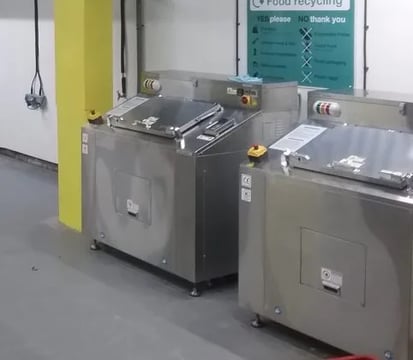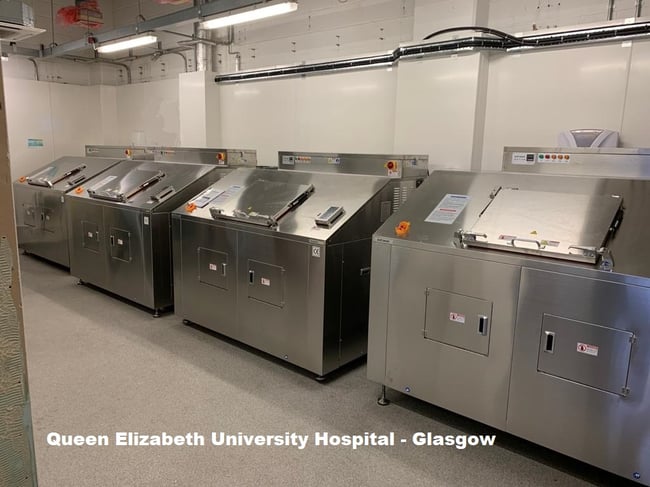
Hospital catering teams face a unique challenge when it comes to managing food waste. With thousands of meals prepared daily, kitchens generate significant volumes of organic waste that can attract vermin, create unpleasant odours, and drive up disposal costs. A food waste dryer offers a practical solution for NHS and private hospital facilities looking to address these issues.
In this article, we explain what a food waste dryer is, how it works, and why this technology has become a standard piece of equipment in hospital catering environments across the UK.
Key Takeaways: How Food Waste Dryers Help Hospital Catering Teams
- Food waste dryers reduce the weight and volume of hospital catering waste by up to 80-95%, cutting disposal costs.
- The drying process eliminates bacteria and odours, creating a sterile residue safe for storage before collection.
- Bergmann Direct has installed Eco-Smart Food Waste Dryers in over 40 NHS hospitals across the UK.
- On site food waste drying helps hospitals comply with the UK Environment Act 2021 separation requirements.
- The dried residue can be collected anaerobic digestion or waste-to-energy processing.
What Is a Food Waste Dryer?
A food waste dryer is an on site machine that removes moisture from organic waste, converting wet food scraps into a dry, granulated residue. The equipment works by heating food waste to temperatures around 75-85°C while mechanically turning the material to ensure even drying.
Since food waste is approximately 80% water by volume, the drying process dramatically reduces both weight and bulk. The end result is a sterile, odourless powder similar in appearance to coffee grounds. This material is far easier and cheaper to store, transport, and dispose of than raw food waste.
Why Do Hospitals Generate So Much Food Waste?
Hospitals are among the largest producers of food waste in the UK. Several factors contribute to this:
Patient meal services operate around the clock, with breakfast, lunch, dinner, and snacks prepared daily for hundreds or thousands of patients. Menu choices and dietary requirements mean that waste is inevitable when patients leave food uneaten or change their meal preferences at short notice.
Kitchen preparation also generates substantial quantities of vegetable peelings, trimmings, and other organic matter. Combined with post-consumer waste from patient wards, staff canteens, and visitor cafes, the total food waste output from a typical NHS hospital can reach several hundred kilograms per day.
How Does a Food Waste Dryer Work in a Hospital Setting?
The operation of a food waste dryer is straightforward, making it easy for catering staff to integrate into daily routines.
Staff load raw food waste into the machine throughout the day or in a single batch. The equipment accepts most types of organic waste including fruit, vegetables, meat, fish, rice, pasta, bread, dairy products, and even coffee grounds. Large knuckle bones are the only common exception.
Once loaded, the operator closes the lid and presses start. The machine runs automatically, heating the drum to evaporate moisture from the waste. The water content condenses into clean water that drains away through a standard outlet. Moisture sensors detect when the material has fully dried and stop the cycle automatically.
After typically 10-20 hours depending on load size, the dried residue can be discharged into a collection container. This residue is sterile and practically odourless, allowing safe storage for days or weeks before food waste collection.
What Are the Benefits for Hospital Catering Teams?
Hospital facilities managers and catering supervisors typically see several operational improvements after installing a food waste dryer.
Volume and Weight Reduction
By removing the water content, a food waste dryer reduces waste volume and weight by 80-95%. This means fewer collection containers, less frequent pickups, and lower haulage costs. For a busy hospital, the savings can be significant over the course of a year.
Improved Hygiene Standards
Raw food waste stored in bins attracts rats, mice, flies, wasps, and seagulls. In a healthcare environment where infection control is critical, eliminating these vermin risks is a major benefit. The Eco-Smart Food Waste Dryer from Bergmann Direct eliminates odours and creates conditions that do not attract pests.
Regulatory Compliance
The UK Environment Act 2021 requires businesses to separate food waste from general waste. Putting food waste down drains using sink disposal units is now prohibited across the UK. On site drying keeps hospitals fully compliant with current regulations.
Simpler Waste Handling
Dried residue is cleaner to handle than wet food waste. Staff no longer need to manage leaking bags or deal with spillages during transport to external bins. The processed material can be stored safely on site until collection, reducing the urgency around waste removal schedules.
What Happens to the Dried Residue?
The sterile powder produced by a food waste dryer has several potential destinations. Most hospitals arrange for the material to be collected and sent to industrial composting facilities, anaerobic digestion plants, or waste-to-energy facilities.
Anaerobic digestion breaks down organic matter in the absence of oxygen, producing biogas that can generate electricity or heat. Industrial composting creates nutrient rich material for agricultural use. Waste-to-energy plants burn the dried residue to generate power.
Bergmann Direct can help hospital facilities identify appropriate collection services and ensure a clear audit trail for sustainability reporting. This documentation supports NHS trusts in meeting their net-zero targets and environmental obligations.
Which Food Waste Dryer Size Suits a Hospital?
Food waste dryers come in a range of capacities to match different output volumes. For hospital catering operations, the choice typically depends on the number of beds and meals served daily.
Smaller units processing 20-50kg per day suit satellite kitchens, cafes, or smaller facilities. Medium-capacity machines handling 50-100kg per day work for district hospitals or sites with moderate food service operations.
Larger NHS trusts and acute hospitals often require units capable of processing 100-350kg daily. The Bergmann Direct ES500 handles up to 350kg per day, while the ES150 suits medium volume requirements.
A site survey helps determine the right specification. Bergmann Direct offers free site assessments to measure food waste output and recommend appropriate equipment.
How Does This Compare to Other Food Waste Methods?
Hospital catering teams have traditionally relied on several approaches to managing organic waste. Each has limitations that food waste dryers address.
Storing raw waste in external bins leads to odour problems, vermin attraction, and high collection costs. The wet, heavy nature of food waste fills containers quickly and makes handling unpleasant for staff.
On site composting requires daily addition of carbon materials such as woodchip, takes weeks to break down waste, and produces odours during decomposition. This method also demands more space and ongoing attention than most hospital sites can accommodate.
Some commercial kitchens have historically used sink disposal units that macerate waste into drains. This practice is now prohibited in the UK. A food waste dryer offers a compliant alternative that avoids issues with blocked drains, fat buildup, and wastewater treatment overloading.
What About Installation and Maintenance?
Food waste dryers are designed as plug-and-play equipment that fits into existing kitchen spaces. Installation requirements are modest: a three-phase power supply and proximity to a floor drain or sink outlet.
Bergmann Direct provides installation and training by qualified engineers. Staff learn how to load, operate, and discharge the machine correctly. The training typically takes less than an hour.
Maintenance needs are minimal. The main requirement is wiping door seals with a damp cloth to prevent degradation. No daily addition of enzymes, bacteria, or other materials is needed. All new Bergmann Direct machines come with a 12 month parts and labour warranty, with extended options available over 3 and 5 years.
In Conclusion: A Practical Solution for Hospital Food Waste
Food waste dryers give hospital catering teams a reliable way to reduce waste volume, cut disposal costs, and maintain high hygiene standards. With over 40 NHS hospitals already using Eco-Smart technology, the approach has proven effective across diverse healthcare settings.
For facilities managers exploring food waste solutions, the combination of regulatory compliance, operational efficiency, and vermin elimination makes this technology worth considering. Bergmann Direct offers buy, rent, or lease options through the NHS SBS framework, making procurement straightforward for NHS trusts.
FAQs about How Food Waste Dryers Help Hospital Catering Teams
How much can a food waste dryer reduce hospital catering waste?
A food waste dryer typically reduces waste volume and weight by 80-95%. Since food waste is approximately 80% water, removing this moisture content creates a compact, dry residue that takes up far less storage space and costs less to transport.
Are food waste dryers compliant with UK environmental regulations?
Yes. The Eco-Smart Food Waste Dryer from Bergmann Direct keeps hospitals fully compliant with the UK Environment Act 2021. The equipment separates food waste on site without putting any organic material down drains, meeting current legal requirements.
How long does it take to process a batch of food waste?
Cycle times vary based on the volume and type of waste loaded. For a full load in a medium to large machine, expect 10-20 hours. Wetter foods take longer to dry, while smaller loads complete faster. The machine runs automatically and stops when moisture sensors detect the material has dried.
Can hospital staff easily operate a food waste dryer?
Yes. Bergmann Direct machines are designed for simple operation. Staff load waste, close the lid, and press start. No technical knowledge is required. Bergmann Direct engineers deliver on-site training during installation, and the process takes under an hour to learn.
What types of food waste can go into a dryer?
Food waste dryers accept most organic materials including fruit, vegetables, meat, fish, dairy, bread, pasta, rice, tea bags, and coffee grounds. Large knuckle bones should be excluded. Non-food items such as plastic packaging, glass, and cutlery must be kept out of the machine.
Does Bergmann Direct supply food waste dryers to NHS hospitals?
Yes. Bergmann Direct has installed Eco-Smart Food Waste Dryers in over 40 NHS hospitals across the UK since 2016. The company is an official NHS supplier and is listed on the NHS SBS waste minimisation framework for straightforward procurement.