If your site runs open containers for bulky waste, you know the cost of transporting half-empty skips. A roll packer machine solves that by compacting waste directly inside the container, increasing tonnages and cutting haulage costs. Bergmann Direct delivers some of the highest compaction ratios in the UK today.
This guide covers everything you need to know about roll packers: how they work, which type fits your operation, what performance to expect, and how to evaluate one before you commit. By the end, you will have the knowledge to make a confident equipment decision.
Key Takeaways: The Complete Guide to Roll Packer Machines
- Roll packers compact bulky waste directly in open containers, achieving compaction ratios between 3:1 and 7:1.
- Three main types exist: static, traversing, and mobile, each suited to different site layouts and waste volumes.
- Bergmann Direct offers hydraulic, diesel, and electric roll packers backed by nationwide service and installation.
- Typical 35-yard containers go from around 2 tonnes uncompacted to 8 to 12 tonnes after roll packer processing.
- Choosing the right roll packer depends on container count, site access, waste type, and sustainability targets.
What Is a Roll Packer Machine?
A roll packer (also known as Roller Crusher) is a heavy duty compaction machine designed to crush and compress bulky waste inside open top containers. Unlike traditional enclosed compactors that push waste against a fixed wall, a roll packer uses a weighted drum that rolls back and forth over the material.
The drum, typically weighing around 1.8 tonnes, features spiked teeth that bite into timber, pallets, hard plastics, green waste, and even light metals. As the drum passes over the load, it fractures rigid materials and forces them into every available space inside the container.
This approach eliminates the air pockets that normally fill open skips. The result is a container that holds four to seven times more waste by weight than an uncompacted one, depending on the material being processed.
How Does a Roll Packer Work?
The operating principle is straightforward. An operator positions the roll packer over or beside an open container. The geared drum then travels the length of the container, crushing waste on each pass.
Adjustable cycle times let you run the drum for a few minutes or several hours, depending on the waste stream and how full the container is. You can continue loading material while the drum operates, which means there is no downtime waiting for a compaction cycle to finish.
The drum travel length is set automatically to stop short of the container walls, protecting the container from impact damage. Safety interlocks prevent the machine from starting until the container is correctly aligned, and a safety cage surrounds three sides of the unit on static models.
What Types of Waste Can a Roll Packer Handle?
Roll packers are engineered for bulky, rigid, and voluminous waste streams. Common materials include wooden pallets, packing crates, timber offcuts, green waste, hard plastics such as ABS and WEEE, light metals like white goods, and general mixed waste.
The drum configuration can be matched to your waste profile. Standard spiked drums work well for timber and general industrial waste. Bat shaped tooth drums grip and tear bulky items like furniture and caravans. Flat drums apply pure compressive force to loose packaging or uniform materials.
Why Use a Roll Packer Instead of a Static or Portable Compactor?
Static and portable compactors work by pushing waste against a plate inside an enclosed chamber. They are a good fit for consistent, high volume dry or wet waste streams like cardboard or food waste. But they are not designed for bulky, irregularly shaped items that do not feed easily through a hopper.
A roll packer takes a different approach. It works with open containers, which are simpler to load with oversized items using a forklift, grab, or by hand. There is no hopper restriction, no press plate to clean, and no enclosed chamber to maintain.
For sites handling wood, pallets, demolition debris, or mixed bulky waste, a roll packer typically outperforms a static compactor on tonnage per container. A standard 35-yard skip might hold 2 tonnes uncompacted. After processing with a roll packer, that same container regularly holds 8 to 10 tonnes.
When Is a Static or Portable Compactor the Better Choice?
If your waste stream is primarily wet (food waste, organic material) or consists of uniform dry recyclables (cardboard bales, plastic film), an enclosed waste compactor or baler may be more appropriate. These machines contain liquids and odours, which is not something a roll packer is built for.
Many industrial sites use both. A roll packer handles bulky container waste, while a portable or static compactor manages the general or wet waste stream separately. This combined approach keeps every waste stream optimised.
The Three Types of Roll Packer
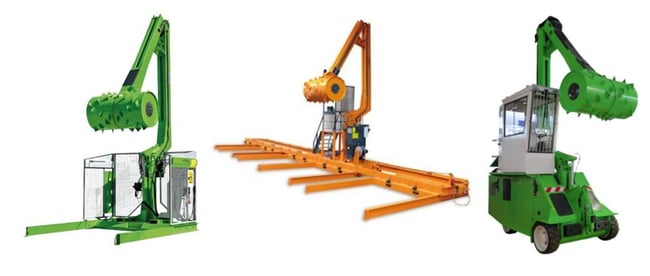
Roll packers come in three configurations. The right choice depends on how many containers you run, how they are arranged, and whether the machine needs to move around your site.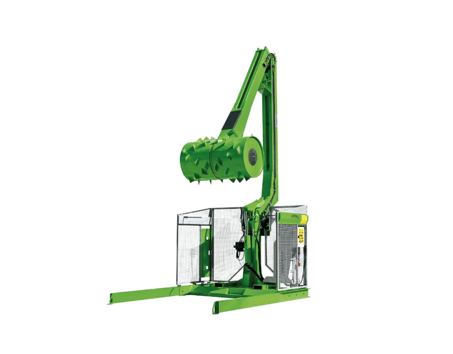
Static Roll Packers for Single Container Operations
A static roll packer is fixed in position and services a single container. It is the most straightforward option: install it, position a container underneath, and start compacting.
Bergmann Direct's Static Roll Packer (RP7700) delivers a minimum 4:1 compaction ratio. That means a container that previously held 2 tonnes of wood waste will hold 8 to 10 tonnes. For a site with one primary container generating consistent bulky waste, this machine is hard to beat.
Traversing Roll Packers for Multiple Containers in a Row
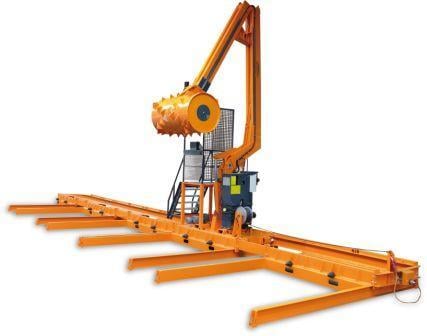
A traversing roll packer mounts on a rail system and travels along a line of containers. One machine can service up to ten containers arranged in a row, compacting each in sequence.
This configuration suits sites that segregate waste into multiple streams but keep containers side by side. Recycling centres, manufacturing facilities, and distribution hubs often use traversing units to manage wood, metals, plastics, and general waste with a single piece of equipment.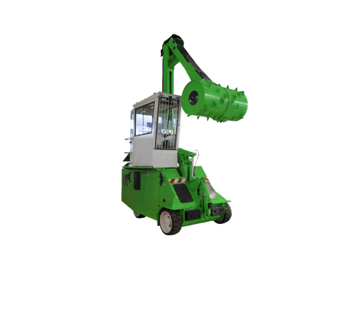
Mobile Roll Packers for Large, Spread Out Sites
A mobile roll packer runs on wheels and can drive to any container on site. This is the most versatile option, ideal for Household Waste Recycling Centres (HWRCs), large retail parks, warehouses, and utility sites.
The Bergmann Mobile Roll Packer is now used by over 50% of all Scottish and Northern Irish councils for their HWRC operations. It achieves the same 4:1 to 5:1 compaction ratios as the static model, with the added flexibility of moving between containers spread across a site.
Hydraulic, Diesel, or Electric: Choosing Your Power Source
Bergmann Direct offers roll packers in three power configurations. Each has distinct operational characteristics worth understanding before you make a decision.
Hydraulic Roll Packers
The original hydraulic roll packer connects to a mains electricity supply and uses a hydraulic system to drive the compaction drum. Available in static and traversing models, hydraulic units are proven, reliable, and well-suited to indoor or semi-enclosed environments.
Diesel Mobile Roll Packers
The diesel-powered mobile roll packer runs a 1,800cc Kubota engine. It is entirely self-contained, requiring no trailing cables or external power connections. This makes it the go-to option for outdoor sites where containers are spread over a wide area.
Electric Roll Packers
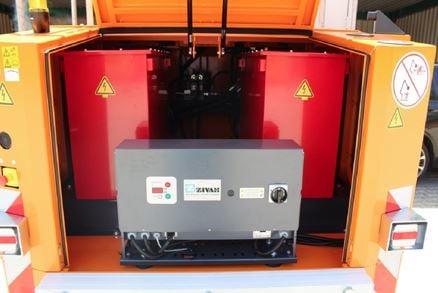
Bergmann Direct's electric roll packers represent the latest generation. The Electric Mobile Roll Packer (RP-EV) uses two 12kW electric motors and a 26.2kW Lithium Iron Phosphate battery. A full charge gives you approximately 9 hours of uninterrupted compaction and container-moving.
The Electric Static Roll Packer (RP7700-E) uses 68% less electricity than the hydraulic equivalent. It also runs at just 65dB, making it noticeably quieter. For sites close to residential areas or with strict noise restrictions, the electric model is a practical choice.
Both electric models deliver the same compaction performance as their hydraulic and diesel counterparts. You get zero direct emissions, lower energy costs, and reduced maintenance requirements.
What Compaction Performance Should You Expect?
Performance varies by waste type, container size, and how long the drum runs. Here are the figures based on a standard 35-yard container filled with waste pallets or wood.
Without compaction, a 35-yard container typically holds around 2 tonnes. With a roll packer, that figure rises to 8 to 12 tonnes, depending on the material. That is a 4:1 to 6:1 compaction ratio, which directly translates into fewer collections and lower transport costs.
Bergmann Direct reports compaction ratios between 3:1 and 7:1 across its roll packer range. Wood and pallets tend to compact at the higher end because the spiked drum shatters the material effectively. Mixed general waste and plastics typically fall in the 3:1 to 4:1 range.
How Compaction Reduces Your Operating Costs
Take a practical example. A 35-yard container holding 2 tonnes of wood waste might cost £150 per transport run. Collected twice a week, the annual cost is around £15,600.
With a static roll packer producing containers averaging 8 tonnes, the same waste volume requires far fewer collections. The annual cost drops to approximately £3,900, saving over £11,700 per year. Those savings increase further when you factor in reduced vehicle movements and lower carbon emissions from fewer haulage trips.
Roll Packer Safety Features and Compliance
Any compaction equipment used in a UK workplace must comply with the Provision and Use of Work Equipment Regulations (PUWER). Roll packers from Bergmann Direct are designed with safety built in at every stage.
Static models include a safety cage around three sides of the machine. Safety levers and guide plates create a mechanical interlock system that prevents the machine from starting unless the container is correctly positioned. Once a cycle begins, the automated preset cycle length restricts drum travel distance so the drum never contacts the container walls.
All Bergmann Direct installations are carried out by factory-trained and accredited engineers. The installation includes on-site safety training for your operators, with certification on completion. This means your team is competent and confident from day one.
How to Evaluate a Roll Packer for Your Site
Choosing the right roll packer is not a one-size-fits-all decision. Here are the key factors to consider during your evaluation.
How Many Containers Do You Operate?
If you run a single container, a static roll packer is the simplest and most cost-effective option. For multiple containers in a row, a traversing unit covers the job. For containers scattered across a large site, a mobile roll packer gives you the flexibility you need.
What Type of Waste Are You Processing?
Roll packers excel with bulky, rigid waste: wood, pallets, hard plastics, and light metals. If your primary waste stream is wet or liquid-bearing, an enclosed compactor is a better match. Many operations run both, using each machine where it performs strongest.
Do You Need Electric or Diesel Power?
Electric models suit sites with access to a charging point and a focus on sustainability, reduced noise, or lower emissions. Diesel units work best in remote or outdoor settings where mains power is unavailable. Hydraulic static units are the established choice for fixed indoor installations.
What Level of After-Sales Support Do You Need?
Equipment is only as good as the service behind it. Bergmann Direct includes a 12-month parts and labour warranty on all new machines, with extended options at 3 and 5 years. Nationwide service and repair keeps your equipment running efficiently.
Smart sensor technology with an online portal gives you real-time machine data to prevent unexpected downtime.
Roll Packers Compared to Mechanical Diggers and Grabs
Some sites use JCB-type mechanical diggers with shovels or grabs to press waste into containers. While this gets the job done in a basic sense, there are several drawbacks.
Diggers require operators with specialist licences. The grab or bucket presses down on waste from above, which is not what these machines are designed for. This causes excessive wear on the digger's hydraulic arms and can damage containers, creating hidden maintenance and replacement costs.
A roll packer is purpose-built for container compaction. The drum applies consistent, controlled pressure across the full width and length of the container. It does not require a licensed operator, and it protects the container rather than damaging it. For dedicated waste compaction tasks, a roll packer is the more efficient long-term choice.
Finance and Procurement Options for Roll Packers
Bergmann Direct offers finance options to match your budget and procurement requirements. You can purchase outright, rent, or lease. Rental and lease arrangements are popular with local authorities and public sector organisations that need to spread costs or align with framework agreements.
Bergmann Direct is an approved supplier on the Scotland Excel Framework and has supported over 40 councils with tailored waste and recycling solutions. For public sector buyers, this means a straightforward procurement route with confidence in compliance. The company's ISO 9001 certification and SafeContractor approval further support due diligence requirements.
Sustainability Benefits of Roll Packer Compaction
Every additional tonne packed into a container is a haulage journey saved. Fewer collections mean fewer diesel trucks on the road, which directly reduces carbon emissions and supports your net-zero and ESG reporting targets.
According to WRAP's UK Gate Fees Report (2025), transport remains one of the largest cost components in waste management. Reducing vehicle movements through better compaction is one of the most practical steps any operation can take to lower both costs and environmental impact.
Bergmann Direct's electric roll packers go a step further, producing zero direct emissions on site. The RP-EV's Lithium Iron Phosphate battery has a 20-year, 4,000-hour lifespan, meaning long-term sustainability is built into the machine itself.
In Conclusion: How to Choose the Right Roll Packer for Your Operation
A roll packer is one of the most effective ways to cut waste disposal costs, increase container tonnages, and reduce the environmental impact of your waste operations. The technology is proven, with Bergmann having sold over 35,000 roll packers worldwide since the 1980s.
Start by auditing your current container usage: how many containers you run, what waste goes in them, and how often they are collected. Match that information against the three roll packer types (static, traversing, mobile) and the available power options (hydraulic, diesel, electric).
If you manage bulky waste in open containers and want to maximise every collection, a roll packer is worth serious consideration. Bergmann Direct can help you identify the right configuration for your site, backed by nationwide installation, training, and ongoing service support.
FAQs About Roll Packer Machines
What is the typical compaction ratio of a roll packer?
Compaction ratios typically range from 3:1 to 7:1, depending on the waste type. Wood and pallets compact at the higher end. Bergmann Direct's roll packers consistently achieve 4:1 or above, turning a 2-tonne container load into 8 to 10 tonnes.
Can a roll packer handle materials other than wood?
Yes. Roll packers process general waste, hard plastics, green waste, light metals, and furniture. Bergmann Direct offers three drum types to match different material profiles, including spiked, bat-tooth, and flat drums.
Do I need a special licence to operate a roll packer?
No. Unlike mechanical diggers, roll packers do not require a specialist operator licence. Bergmann Direct includes on site safety training and certification with every installation, so your team is fully prepared to use the equipment safely.
What is the difference between a static and mobile roll packer?
A static roll packer is fixed in place and services one container. A mobile roll packer drives to any container on site. Bergmann Direct's mobile models are used by over 50% of Scottish and Northern Irish councils for multi container HWRC operations.
How do electric roll packers compare to diesel models?
Electric roll packers deliver the same compaction performance as diesel units, with zero direct emissions, lower noise, and reduced maintenance. Bergmann Direct's RP-EV runs for approximately 9 hours on a single charge, with a 45-minute fast-charge to 80% capacity.
How long does it take to install a roll packer?
Installation timelines vary by model and site preparation needs. Bergmann Direct handles the full process with factory trained engineers, including positioning, commissioning, and on site operator training with certification.